Shining Some Light on How to Choose the Right Bulb
Stop me if this sounds familiar. You finally find the perfect light fixture after months of searching. You have it installed, flip the switch… and instead of creating the cozy, relaxing oasis of your dreams, your living room is giving haunted dentist’s office vibes. You wonder, how can something as small as a light bulb throw off an entire room?

Here’s the thing, choosing the right light bulb for your fixture and space shouldn’t feel like decoding a Taylor Swift album drop easter egg, and yet, here we are. Between lumens, Kelvins, and packaging design that feels intentionally hard to read, it’s no wonder many have a hard time with this task.
The good news is that once you understand a few basics, selecting the right light bulb will become weirdly satisfying.
A word of warning: It’s been said that with great power, comes great responsibility, the same applies to lighting design. You may not be able to unsee when things aren’t working in other spaces but I’m going to ask that you resist wielding this new super power where it is unwanted. You may think you’re a modern day interior design Robin Hood, stealing those 5000K light bulbs in your brother-in-law’s living room and swapping them for something in the 3000K range. As much as I love vigilante lighting justice, just be sure to ask first.
Now on to the good stuff!
Why Light Bulb Choice Matters
You might be thinking, “This seems like more of a design-person issue”, and, yes, we do care… a lot, but lighting affects so many aspects of a space and selecting the right light bulb is a key factor.
Lighting affects:
How your home feels. Are you shooting for cozy or sterile?
How functional your space is. Can you actually see what you’re doing?
Even how you look in the mirror. Anyone else have trauma from overhead florescent lighting in a fitting room? No thanks!
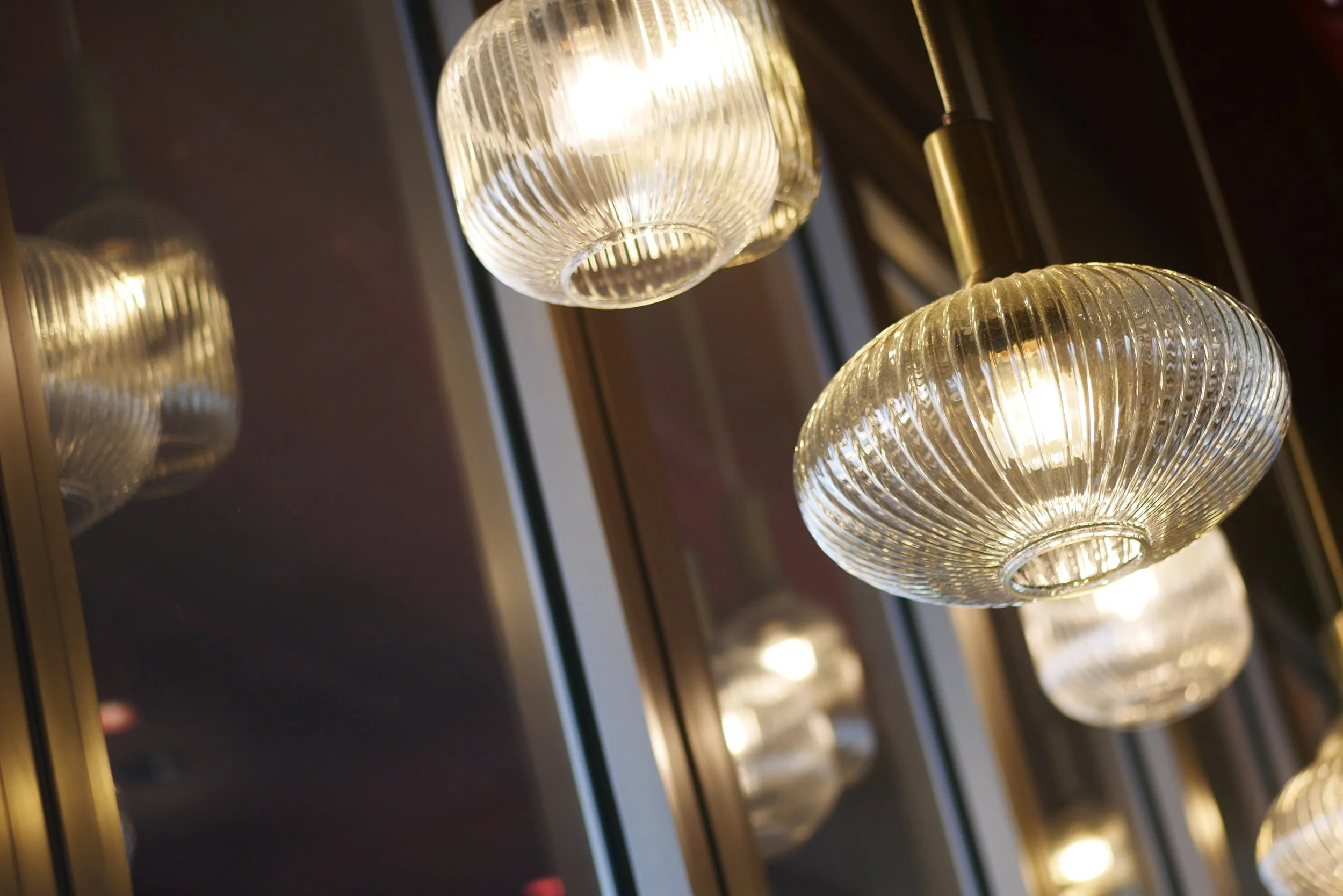
The exact same fixture can feel warm and inviting or harsh and uncomfortable just based on the bulb you screw into it. So if your space feels “off” and you can’t figure out why, your light bulb choice is a very good place to start.
Lumens and Kelvins and Color, Oh My!
We’re going to keep this very simple. For the average person, there are 3 basic things you really need to know when it comes to selecting a light bulb. Those include: Lumens, Kelvin, and CRI (Color Rendering Index).
Lumens = Brightness
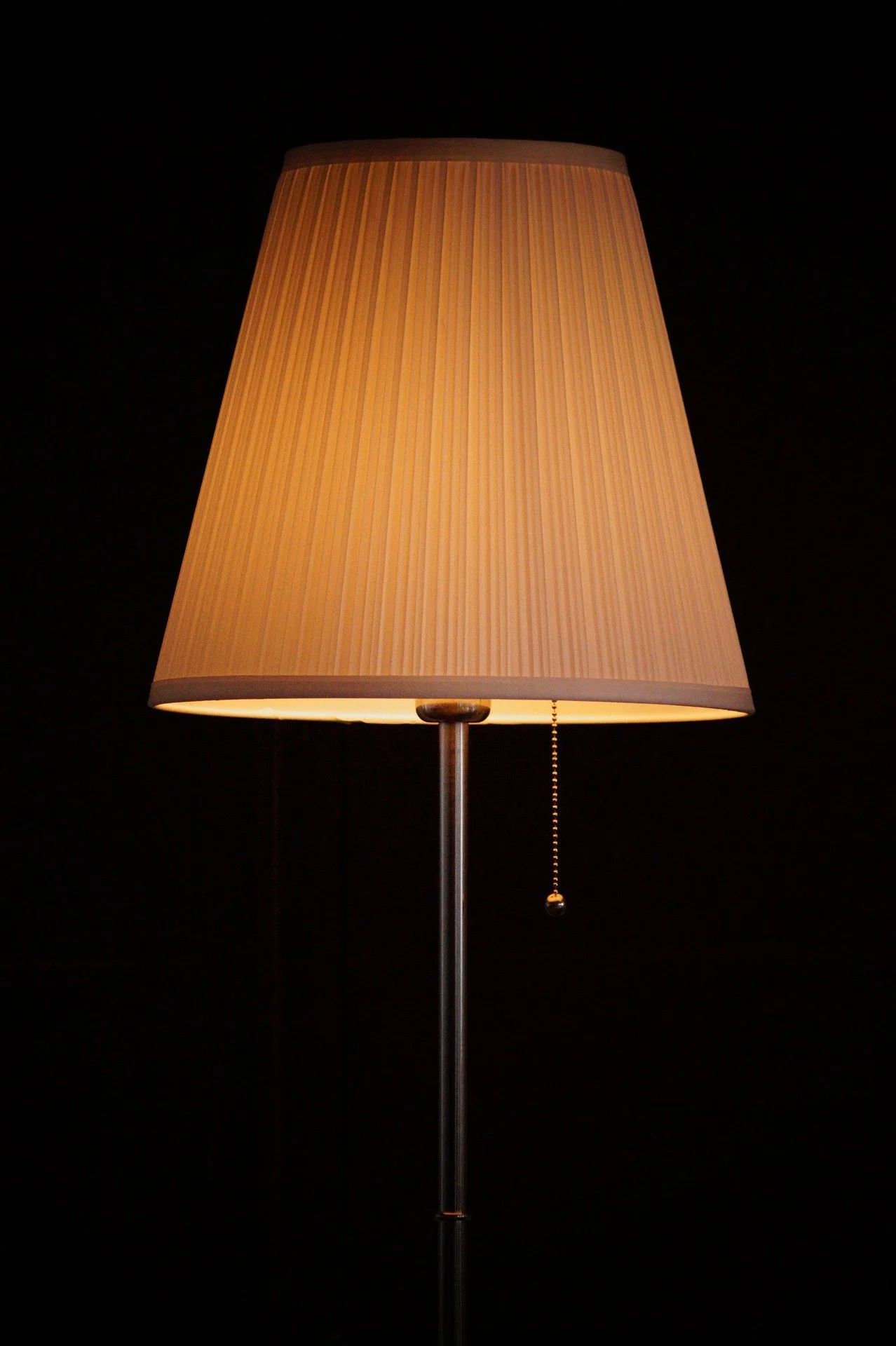
Lumens tell you how bright a bulb is. That’s the long and short of it.
If you take nothing else away from this, remember: more lumens = more light.
But what about watts you might ask? While lumens measure brightness, watts measure energy a light bulb consumes. In the past, wattage was synonymous with brightness, until the advent of modern energy efficient lighting technology like LEDs.
Think of lumens as your “Can I see what I’m doing?” scale.
Lumens Cheat Sheet:
450LM → soft accent or ambient light, great to use for exposed bulbs or multi-bulb fixture
500-600LM → medium brightness
800–1100 lumens → bright, great for recessed lighting, table lamps, and everyday lighting
1200LM → very bright
1500LM or higher → super bright, interrogation room vibes, proceed with caution!
Kelvin = Color Temperature
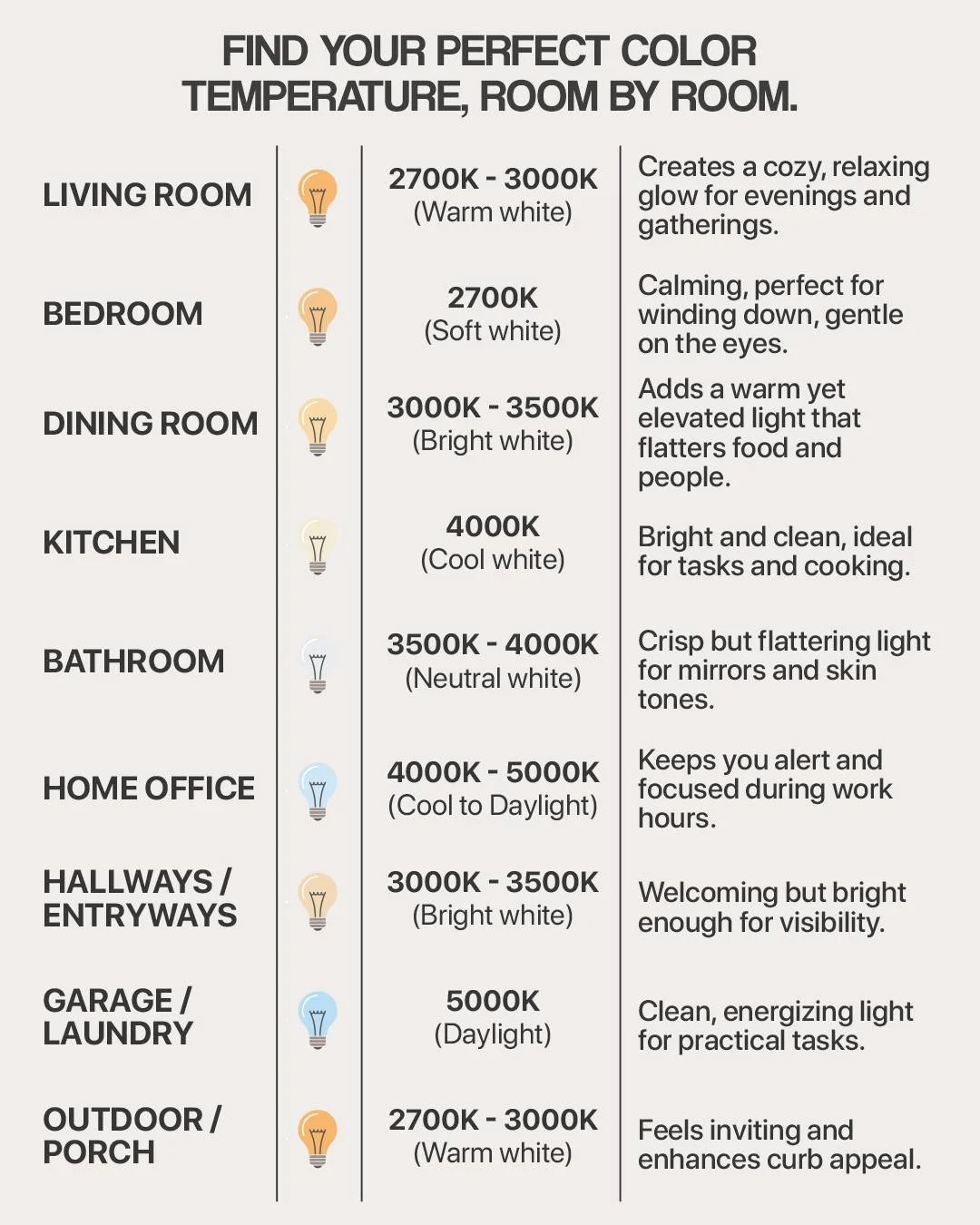
This is where most people go wrong. Kelvin (K) tells you whether your light looks warm and golden or cool and aggressive.
2700K–3000K → warm, soft, cozy, this is what you want in 99% of your living spaces- living rooms and bedrooms
3500K–4000K → neutral, clean, more “functional”, think kitchens and baths
5000K+ → bright, very blue / cool toned, think stereotypical bad office lighting. I’m going to be honest, this shouldn’t be use in your home, maybe a garage, or a guest room for someone you hate.
A good rule of thumb: If your lighting makes you feel like you should be filling out paperwork, or seeing a medical professional, it’s probably too cool.
CRI = How Good Things Look

Cyndi Lauper sang it best, “I see your true colors, and that's why I love you”.
If you’ve ever wondered why your skin looks AMAZING in one mirror and questionable in another, it’s highly likely that it’s thanks to the unsung hero of lighting: CRI (Color Rendering Index).
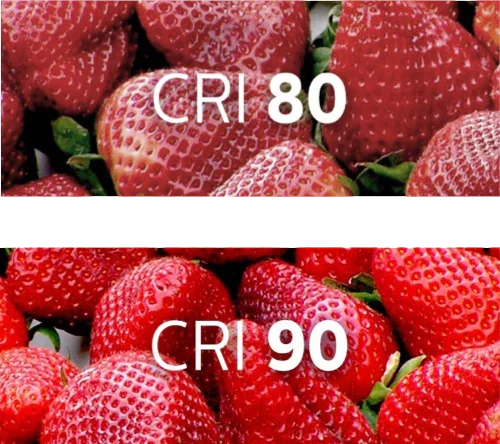
CRI measures a light source’s ability to accurately reveal the true colors of an object compared to natural daylight. This is rated on a scale of 0-100 but the gist is that the higher CRI, the more vibrant and accurate something will look.
80+ CRI Minimum → Good for most spaces in your home.
90+ CRI → Use this where color saturation REALLY matters, like a bathroom, kitchen, or where you’re using a mirror to get ready.
What Light Bulbs to Use Where
Different rooms have different needs, your lighting should reflect that. Below is a quick guide on what bulbs to use where in your home.

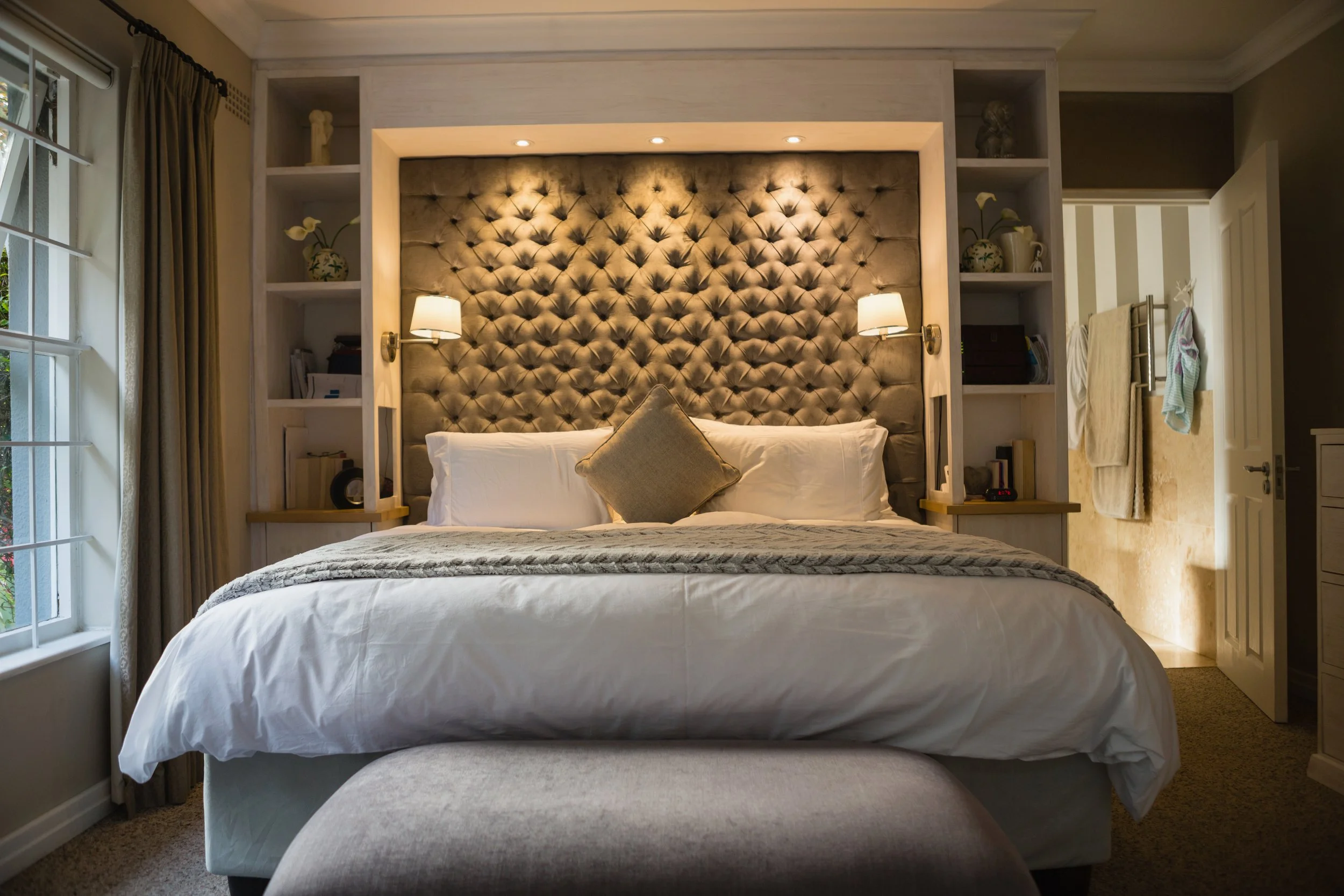
Living Room & Bedroom
This is your cozy zone. You want soft, warm lighting that makes people want to sit down and stay awhile.
2700K–3000K
400-600LM per bulb
CRI 80+
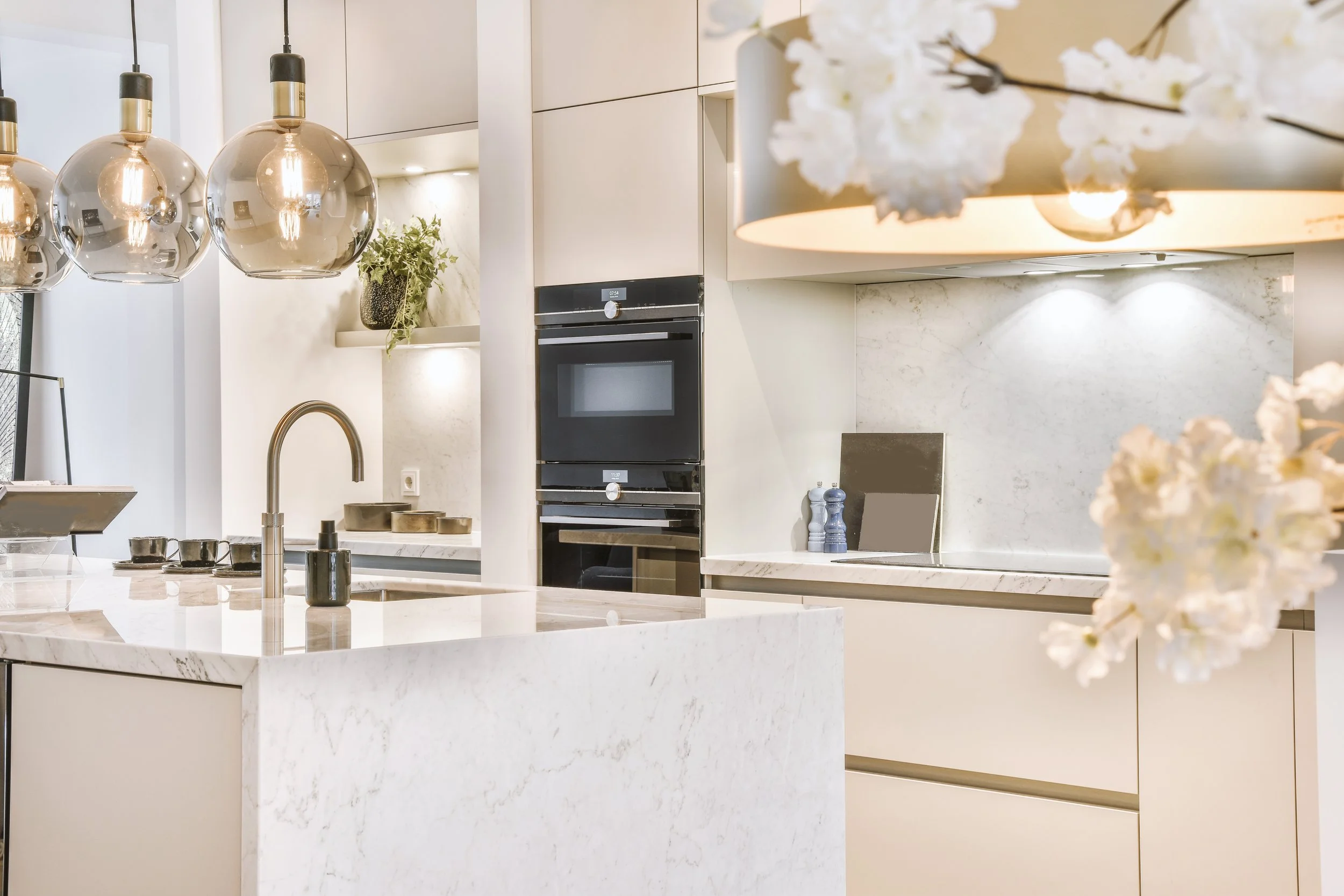
Kitchen
You still want it to feel good, but you also need to see what you’re doing. You are using knives after all.
3000K–4000K
800-1600LM per bulb
CRI 90+
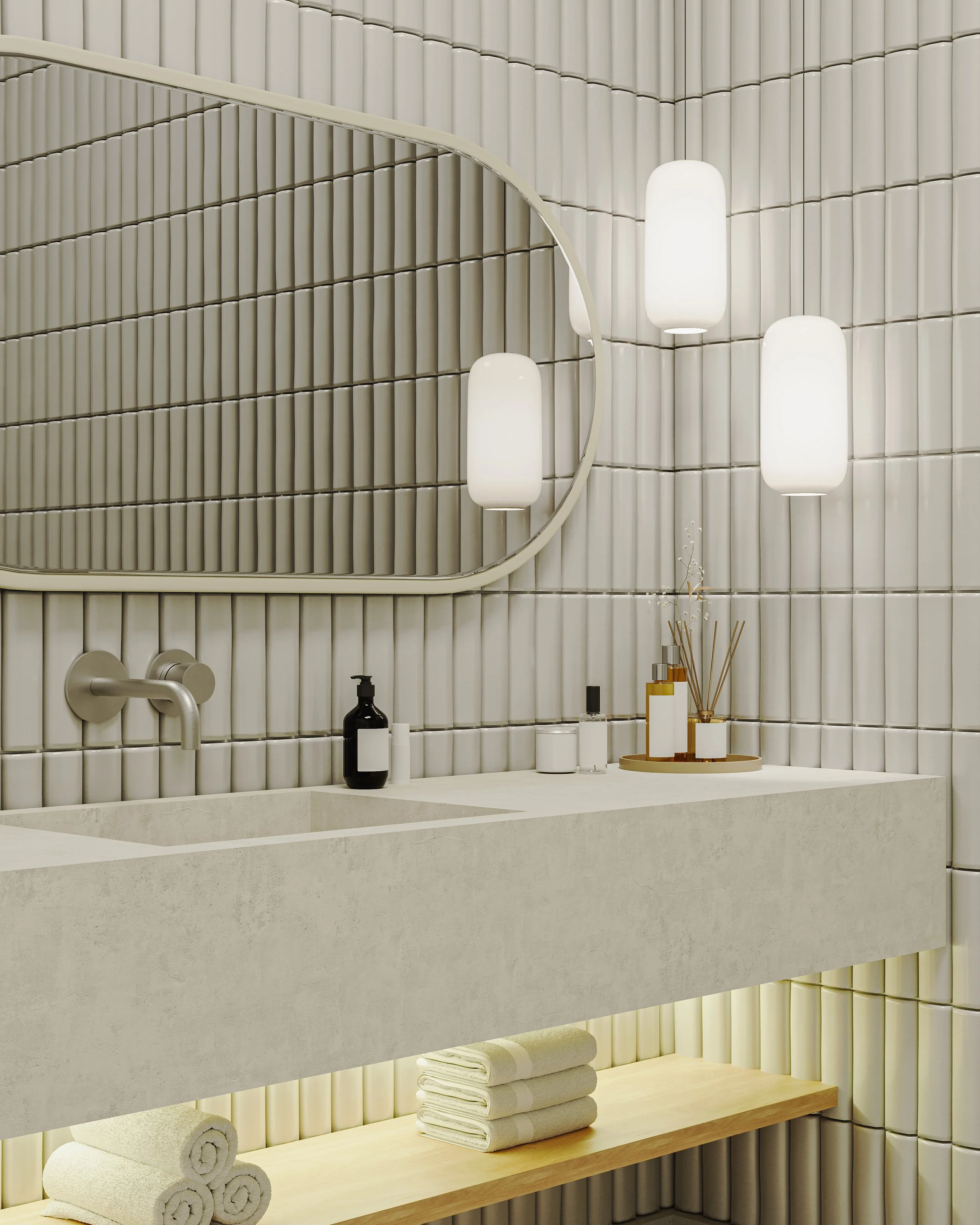
Bathroom
You want your lighting to fall somewhere between flattering and functional. You need to strike a balance of warm and function. Those eyebrows aren’t going to tweeze themselves.
3000K–4000K
800-1100LM per bulb
CRI 90+, a high CRI is very important here
Bonus points if you include dimmable, layered, or accent lighting in your bathroom.
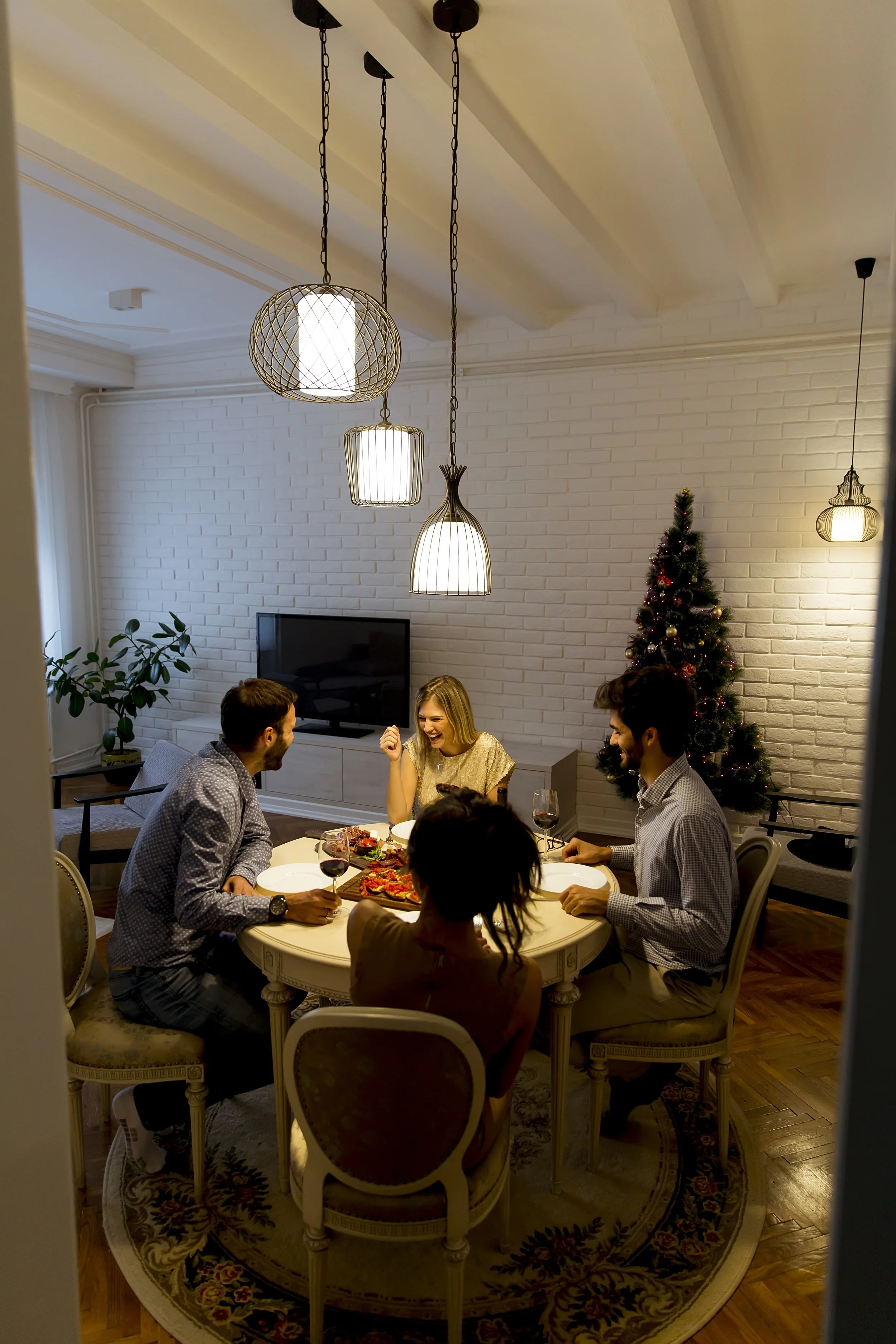
Dining Room
Wanna hear a secret? Warm lighting makes food and people look better. Win win! Also a great place to include on a dimmer switch.
2700K
400-800LM per bulb
CRI 80+

Garage / Laundry
This is possibly the ONLY space you want cooler light. It keeps things feeling crisp and energized and that’s not a bad idea if you’re using power tools.
4000K–5000K
1100-1600+ LM per bulb
CRI 90+
Mo’ Bulbs, Mo’ Problems
Common Light Bulb Mistakes & How to Avoid Them
There are a lot ways you can go off the rails when it comes to lighting. Look out for these very fixable problems:
Using the same bulb everywhere
→ Different rooms need different lighting. The principal of “One-size-fits-all” doesn’t work here.Choosing based on watts instead of lumens
→ This is outdated and will lead you astray.Going too cool in spaces you want to feel cozy
→ If your bedroom feels like a grocery store aisle, something has gone wrong. Check your Kelvins!Not installing dimmers
→ Truly one of the all-time easiest upgrades (that you can even do yourself in some cases) with the biggest payoff. A light without a dimmer is like a radio without a volume button.
Extra Tips for a Big Impact
Clear glass fixtures - Go warmer than you think. They expose the bulb more, which can feel harsh and uncomfortable for your eyes.
Table and floor lamps - Opt for softer and lower in brightness.
Overhead lights - DON’T TURN IT ON! jk. But if you must use “the big light”, you want to balance brightness and warmth and avoid extremes.
And if you want your home to feel like you hired an interior designer, layering your light is the ultimate hack:
Overhead (general lighting)
Lamps (cozy, ambient lighting)
Task lighting (specific function)
Your ceiling light should not be doing all the work. Give it a rest, it’s tired.
Final Thoughts
Lighting doesn’t have to be complicated, but like a lot of design choices in your space, it does have to be intentional.
Once you get the hang of it, lighting can actually be kind of fun, like a magic trick, making it one of the easiest, most low-effort ways to upgrade your space. So next time you flip a switch and something feels “off”, it might not be your furniture, paint color, or your life choices. It might just be your light bulb.